The active consideration in the thoughts and actions is crucial for me to gain awareness in the power of the reflective thinking to support my continuous development (Helyer, 2015). And so, my final post is a reflection on my experience in the module BEMM129.
“Learning to learn” and acceptance in the responsibility for one’s learning and development are important skills
(Barr and Tagg, 1995)
It has already come to the end of week 11 – the experience has been so different to the other modules. What I realised is that the social learning process is one which I not only really benefited from because it really challenged me to think outside of the box and learn new ideas from others effectively, I also really enjoyed it!
There are so many things that I have been able to take away from the module, not least the course content on digital business models and digital economy, but also practical skills, which has made it possible for me to publish this blog post and the following video:
Yes, I made that! I am surprised how easy and fun it was to design and reflect back on my learning process. The pace of the development in the technological sphere has meant that it is necessary to improve diverse skills and adaptability for employability (Helyer, 2015).
The blogs from my peers were very insightful. During the course of the module, for the two blog posts that we wrote on how the digital economy will change job roles and how the digital business model of companies has contributed to their success, we gave each other feedback to facilitate knowledge sharing and to improve learning (research shows that social learning delivers 75x greater return on investment than formal web-based training)! Below are screenshots of my feedback to my peers on their blog posts:

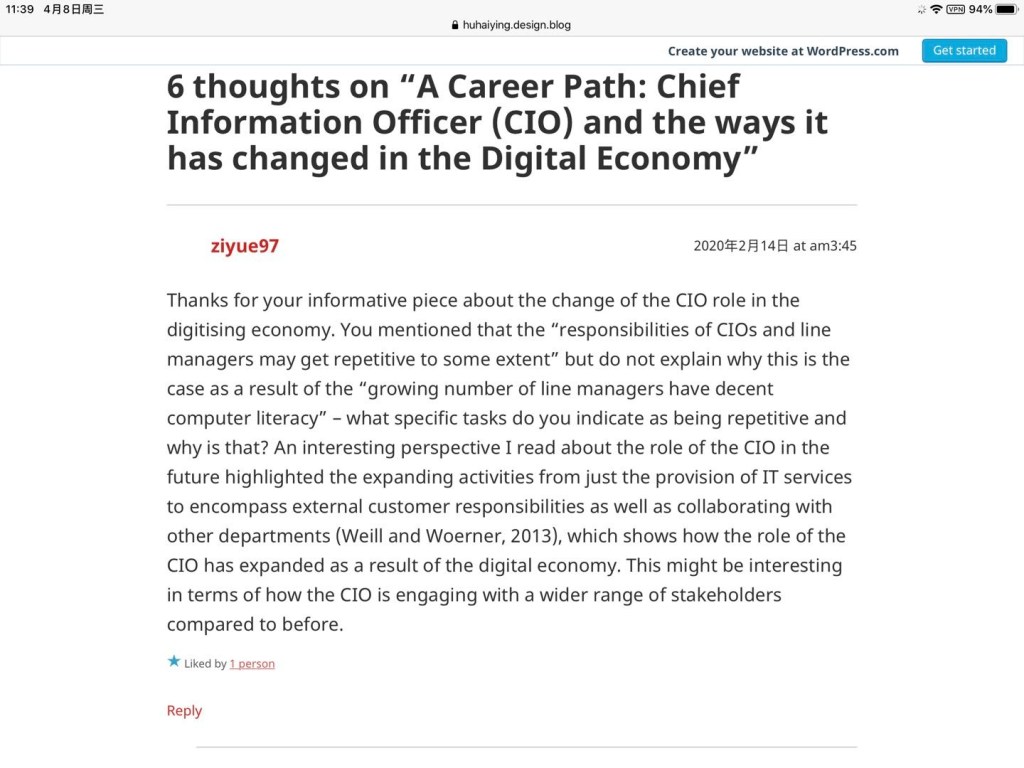
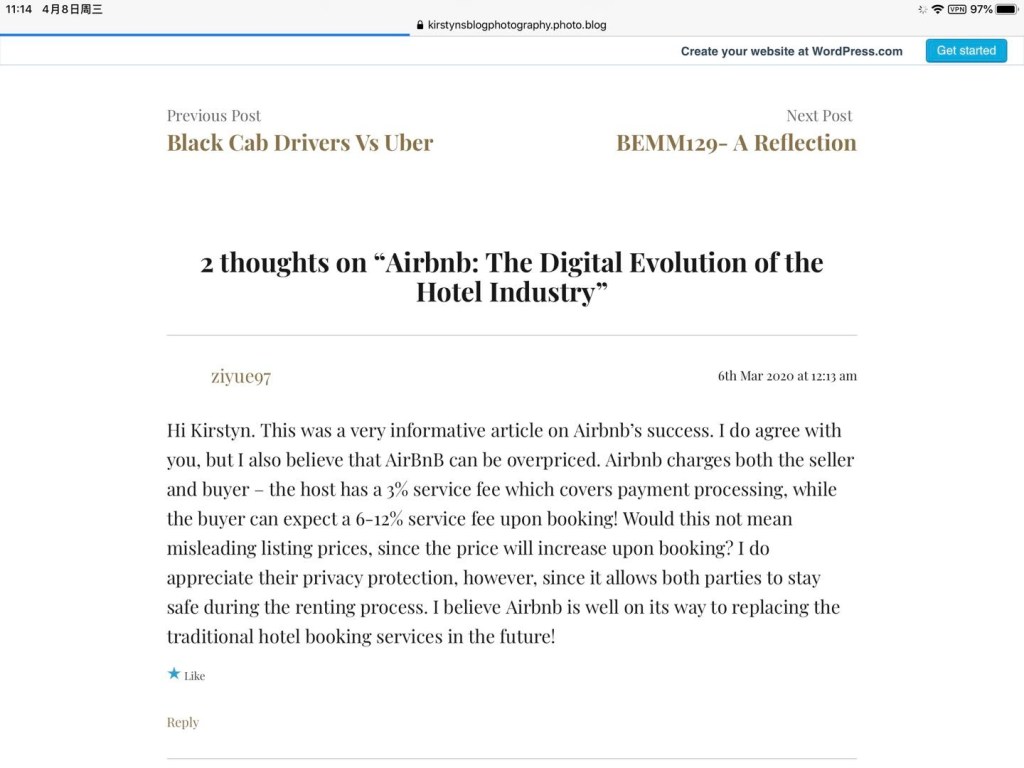
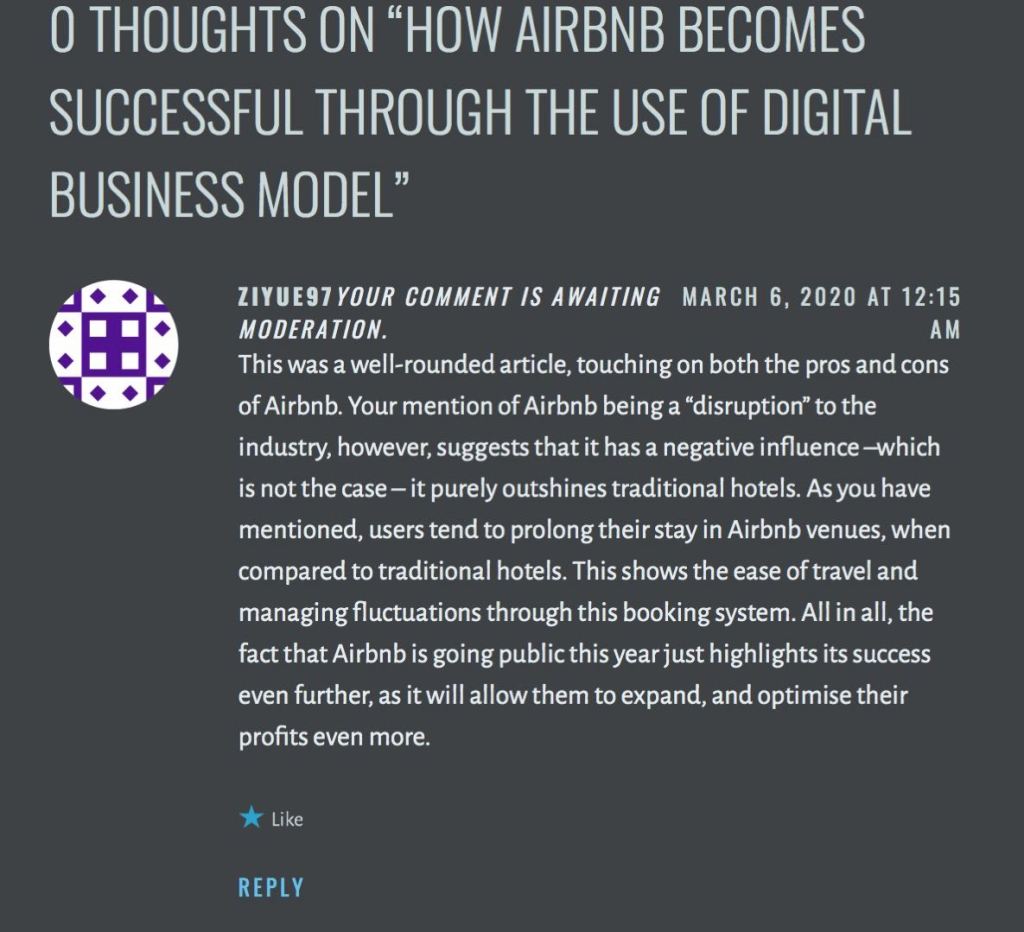
As you can see, I tried to add value to the discussion by putting forth new perspectives. Unfortunately, I did not receive any blog post comments myself because of the mistake I made in not making my blog posts public (I have learned from this lesson though!).
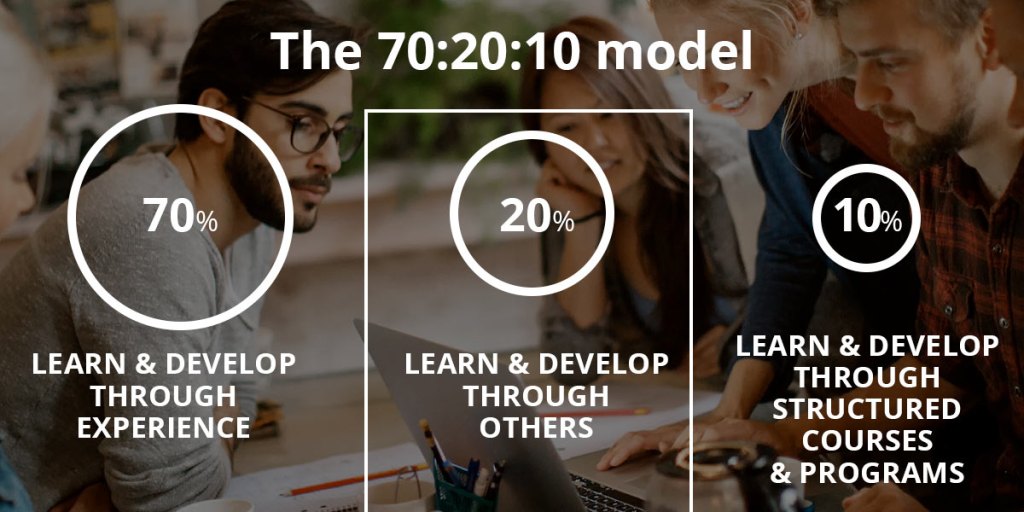
The takeaway from this shows how I should try to adapt my learning to increase its effectiveness. As shown above, the 70:20:10 learning framework suggests that 70% of learning comes from practical experience, 20% from interacting with others and 10% in the traditional, classroom environment.

Thus, it makes sense that, given the benefits of social learning, digital businesses should encourage this social learning process because of the need for agility and diverse skills and talent!
References
Barr, R.B. and Tagg, J. (1995), “From teaching to learning: a new paradigm for undergraduate education”, Change: The Magazine for Higher Learning, Vol. 27 No. 6, pp. 12-26.
Powell M. (2020) What is Social Learning (And How to Adopt it) [online] Available at: https://www.docebo.com/blog/what-is-social-learning-how-to-adopt-it/ [Accessed: 01/04/2020]
Helyer, R. (2015), “Learning through reflection: the critical role of reflection in work-based learning (WBL)”, Journal of Work-Applied Management, Vol. 7 No. 1, pp. 15-27.
Links to Blog Posts
A Career Path: Chief Information Officer (CIO) and the ways it has changed in the Digital Economy
 ziyue zhang