The active consideration in the thoughts and actions is crucial for me to gain awareness in the power of the reflective thinking to support my continuous development (Helyer, 2015). And so, my final post is a reflection on my experience in the module BEMM129.
“Learning to learn” and acceptance in the responsibility for one’s learning and development are important skills
(Barr and Tagg, 1995)
It has already come to the end of week 11 – the experience has been so different to the other modules. What I realised is that the social learning process is one which I not only really benefited from because it really challenged me to think outside of the box and learn new ideas from others effectively, I also really enjoyed it!
There are so many things that I have been able to take away from the module, not least the course content on digital business models and digital economy, but also practical skills, which has made it possible for me to publish this blog post and the following video:
My Powtoon presentation reflecting on BEMM129
Yes, I made that! I am surprised how easy and fun it was to design and reflect back on my learning process. The pace of the development in the technological sphere has meant that it is necessary to improve diverse skills and adaptability for employability (Helyer, 2015).
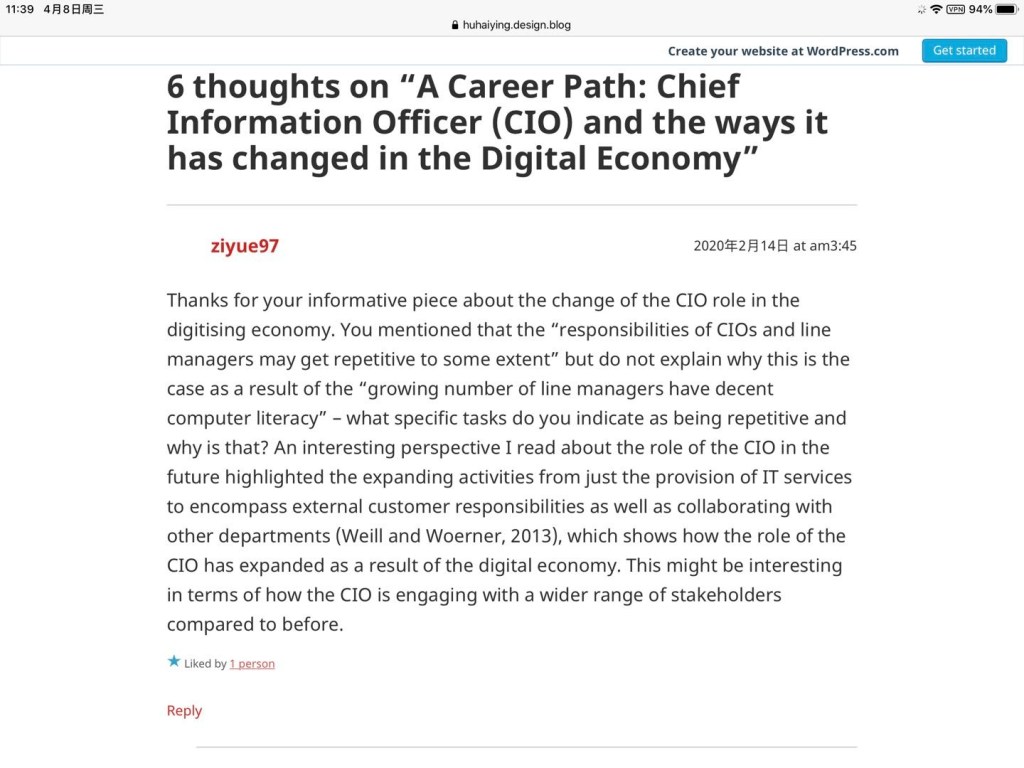
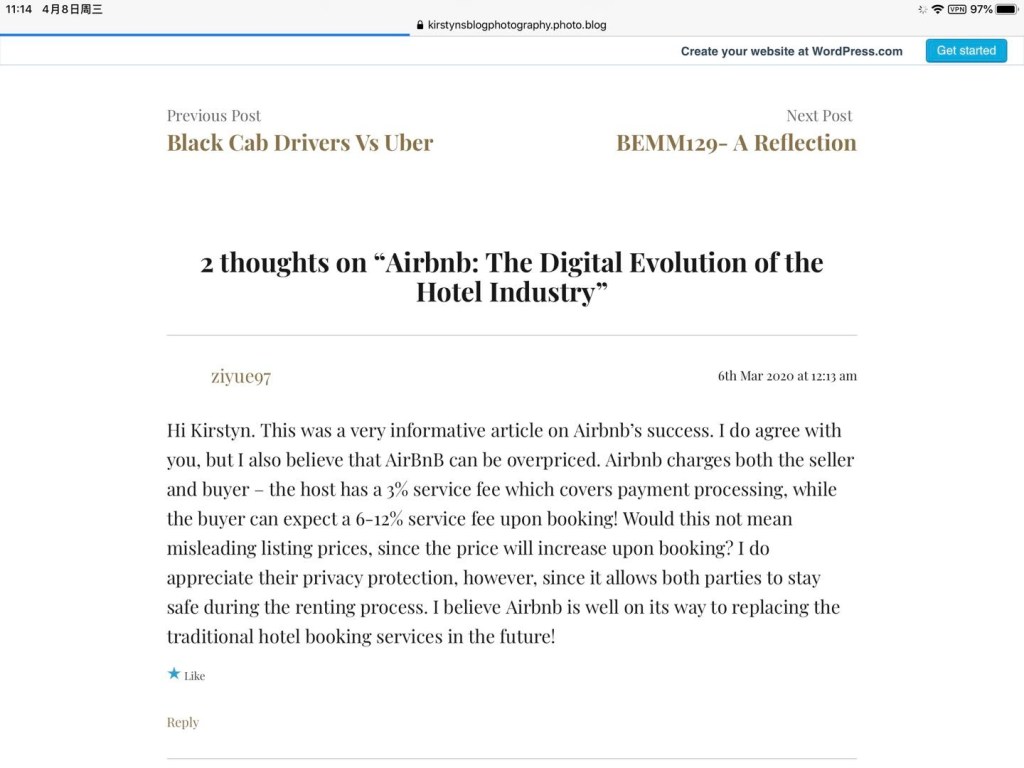
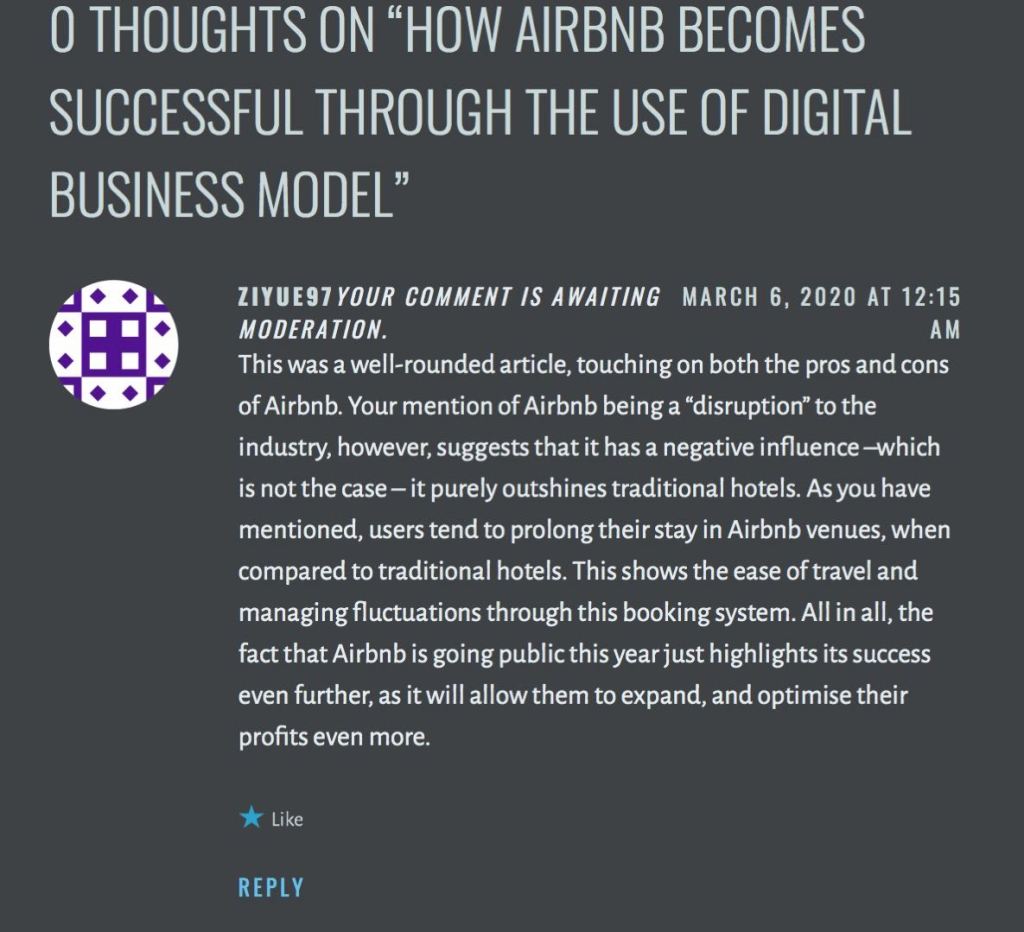
The blogs from my peers were very insightful. During the course of the module, for the two blog posts that we wrote on how the digital economy will change job roles and how the digital business model of companies has contributed to their success, we gave each other feedback to facilitate knowledge sharing and to improve learning (research shows that social learning delivers 75x greater return on investment than formal web-based training)! Below are screenshots of my feedback to my peers on their blog posts:
As you can see, I tried to add value to the discussion by putting forth new perspectives. Unfortunately, I did not receive any blog post comments myself because of the mistake I made in not making my blog posts public (I have learned from this lesson though!).
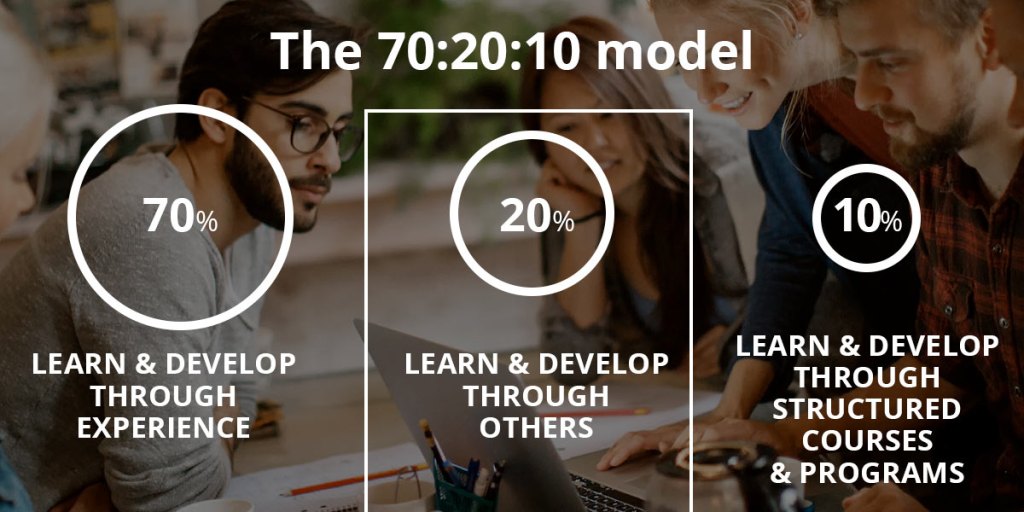
The takeaway from this shows how I should try to adapt my learning to increase its effectiveness. As shown above, the 70:20:10 learning framework suggests that 70% of learning comes from practical experience, 20% from interacting with others and 10% in the traditional, classroom environment.
Thus, it makes sense that, given the benefits of social learning, digital businesses should encourage this social learning process because of the need for agility and diverse skills and talent!
References
Barr, R.B. and Tagg, J. (1995), “From teaching to learning: a new paradigm for undergraduate education”, Change: The Magazine for Higher Learning, Vol. 27 No. 6, pp. 12-26.
Helyer, R. (2015), “Learning through reflection: the critical role of reflection in work-based learning (WBL)”, Journal of Work-Applied Management, Vol. 7 No. 1, pp. 15-27.
Released in 2011 by Tencent, WeChat is a key instant messaging application in China, with the number of monthly active users in the Q3 2019 to now being 1.15 billion across many age groups (Statista, 2020). Its success has been contributed to by its digital business, which has continued to evolve and diversify over time such that WeChat’s business model is more complex. A key feature is the WeChat Moments, which is accessed by 61% of users every time they use the application whilst 22.6% of the users use this function frequently (Statista, 2020). There are inbuilt voice and text messaging functions and group messaging to provide flexibility to the interaction amongst users (Statista, 2020). A function in the application also enables users to follow accounts, including individuals and corporations, where there is an embedded social commerce (Yeweng and Yan, 2017). Furthermore, there are games in the WeChat which can be played between users, to enhance the hedonic experience for the users.
The overall business model of WeChat is freemium, as it is currently free to download and use which has made it attractive to a large user base. The features in the application including WeChat Moments are free for the users. It generates its revenues primarily from the value-added services including the virtual stickers and games (Economist, 2014). Virtual stickers are moving graphics that is used in social media to support communication including images and animated gifs (Xinhua, 2018). The virtual stickers are highly popular in Asian markets since they support the informality of conversation. Approximately 5.2% of users have paid to use WeChat stickers in 2015 (Statista, 2015). These virtual stickers help to increase individual expressivity. There are hundreds of virtual stickers that are available to the users, with the majority of these being free although a set of perhaps 16 to 24 stickers can be purchased for a small fee. However, given the large user base, the sale of virtual stickers can be quite lucrative.
The games on WeChat assumes a strategic role in the generation of users and revenues for the company, Tencent. The game centre operates like a gaming platform which integrates games from other platforms owned by Tencent including QQ. In addition, WeChat partners with King to launch Candy Crush Saga to reach outside the Chinese market. These games help to increase the user stickiness to the mobile phone application (Murphy, 2015). In addition, the appeal of these games in WeChat in comparison to standalone games is due to the close connection with the social features of WeChat. For example, the fact that the games are free to download and play and the encouragement of users to share their scores in the games with other friends on WeChat helps to grow the user base as a result of the network effect. The competitiveness amongst friends encourages users to make in-app purchases such as extra lives in the games. The Q4 performance in 2019 sees the online gaming revenues generating 28.5% of the total revenues for Tencent (Liao, 2019).
WeChat also extends its services to e-commerce with WeChat Pay which is used widely in China as well as online-to-offline (O2O) services. This enables users to connect their bank account to WeChat, such that WeChat becomes a digital wallet (KPMG, 2019). When buying products or services, the user simply scans the QR code in stock or to select the item on WeChat is the brand has an official store on WeChat. This helps to increase the exposure of businesses in China, attracts and retains users due to its convenience as well as enabling WeChat to collect vast consumer data including their transaction history, demographics and online behaviour that can be used to tailor the experiences of the users and to sell to business partners. Furthermore, the use of WeChat Pay generates commission from the merchants.
Figure 1: Share of the key players in the mobile payment market of China by transactions in 2018 (KPMG, 2019)
All in all, the success factors of WeChat lie in its digital business model which adopts a freemium business model which has helped it to build one of the largest userbase in China. The diversity and free to use functions which are social-related help to improve the stickiness of the application for users and provide new channels to generate income. Interestingly, the WeChat application is free from advertisements, which help to emphasise the application for being social-focussed. For example, other features including ‘Look Around’ which allows users to find strangers near them using the same application and ‘Drift Bottle’ which allows users to send anonymous messages and voice messages to be picked up by someone around the world helps to expand relationship chains (Yang et al., 2016). Furthermore, Tencent restricts the brand official accounts to limit promotional messages sent to the public in order. Finally, the partnerships with leading service providers enable WeChat to continue delivering new value to customers, whilst it is well-positioned to leverage consumer data using big data analytics to continually develop the application to deliver strong value proposition to users.
Auditors, particularly internal auditors, need to be responsive to the risks introduced in the digital economy and the Fourth Industrial Revolution (Massey et al., 2018). The digital economy is impactful not only in how auditors conduct auditing but also what they audit. First, the substitution of routine and tedious tasks such as compliance testing with machine learning traditionally performed by auditors means that this would create opportunities and capacities for auditors to direct more attention on the high-risk areas requiring human judgement (Massey et al., 2018). The digital economy now sees more information being recorded, stored and used in digital format on servers. With the use of cloud computing and technologies such as videoconferencing and screensharing, this has made it more efficient for auditors to overcome time and space barriers such that it is possible to work more collaboratively. Indeed, it can be seen that auditors now are increasingly working remotely and with others across countries. Furthermore, big data and advanced analytics has enabled auditors to develop better understanding of their clients and the data, and to provide forward-looking capabilities and forecasting (ACCA, 2019).
Recent technological developments include blockchain technologies which has reduced the need for verifications of the authenticity of accounting transactions because all information is unaltered in blocks (Kamordzhanova and Selezneva, 2019). This reduces the number of intermediaries in transactions and lowers the risk of intrusions on the internal organisational systems of clients. For auditors, blockchain means that less time would be needed by the auditors in verifying transactions and records. The centralisation of digital data also means that auditors would be able to more conveniently access data and inspect the flow of data in real time (Kamordzhanova and Selezneva, 2019) increasing audit efficiencies. However, with the increasing reliance on digital data, the risks of cyberattacks are more frequent and complex, as well as the use of social media by employees and consumers which impacts on the audit risk assessment (ACCA, 2019).
The regulation of artificial intelligence is still under-developed globally. Even so, there have been examples that demonstrate the effectiveness of AI in understanding unstructured data. For example, Ernst & Young has already introduced AI in auditing lease contracts, that “can read hundreds of pages of contract documents and reduce the time it takes for humans to review and audit contracts” (ACCA, 2019: 4). At the same time, as AI technology becomes more prevalent in companies, it is expected that auditors would increasingly play a more crucial in ensuring the use of robotics, for instance, adhere to the global or national standards and regarding personal data protection at their clients. As such, it can be seen that the auditor not only needs to apply emerging technologies in their work to improve audit quality and reduce costs, but also need to understand how to audit them at client organisations (KPMG, 2017).
Future Outlook for the Auditing Profession
The modern audit profession has limited exposure to new technologies including analytics, big data and cloud computing. At present, there are also challenges concerning the lack of standardisation in the auditing of businesses using new technologies. However, trend in the increasing adoption of these technologies means the need for auditors to understand a wider repertoire of technologies is becoming more crucial such that tools used today may become obsolete in future (Massey et al., 2018). For example, it is expected that the AI and predictive analytics will play an even more crucial role in audit tasks that typically required judgement of the auditor.
As yet, the legal and economic status of cryptocurrencies means that they are not yet able to meet the definition of the cash or cash equivalents or even financial instruments, but are instead viewed as intangible assets or stock (Kamordzhanova and Selezneva, 2019). In the future, the increasing use of cryptocurrencies might be positioned to alter the concept of money and assets. It is expected that there would be a greater focus on the development of new standards concerning the cryptocurrencies that will need to be considered by accountants and auditors (Kamordzhanova and Selezneva, 2019). Though the implementation of new technologies offers significant opportunities to improve audit quality and efficiencies, it is also important to realise that the artificial intelligence capabilities are not overestimated so that auditors will remain vigilant (ACCA, 2019).
The trend in digital technologies as a source of sustainable competitive advantage means that auditors will be increasingly expected to offer expertise on how the internal controls and business processes in an organisation can be enhanced and have a greater involvement in risk management in their implementation (Massey et al., 2018). The role of the auditor is expected to evolve into one that is expected to have greater technological capabilities. Whilst internal auditors in particular are likely to be housed as the “service center” and “data analysis expert” in companies (Massey et al., 2018: 12). Therefore, audit companies will need to invest in talent management strategies and development to ensure auditors are prepared for the technologies of tomorrow.
Kamordzhanova N. and Selezneva A. (2019) The Impact of the Digital Economy on Accounting, Reporting and Audit Advances in Economics, Business and Management Research Vol. 79 pp. 228-230
Hello, I am Ziyue Zhang and currently doing MSc in Accounting and Taxation at the University of Exeter. I completed my undergraduate degree in Brighton.
I don’t know much about digital business before, but I thoroughly enjoyed current study of this module. I’m hoping to gain more insight into the realm of Digital Business Models, it may very helpful to my future work.
This module has very different learning methods, and I haven’t had any experience with blog writing or online learning before, but I find it interesting and enjoyable
I spend most of my spare time playing the piano and painting. I like drawing and like to record beautiful things with a brush.



 ziyue zhang